Breathwork & the Body: What Happens When You Finally Listen Inward
What the nervous system reveals when breath becomes the guide.
There are days when even breathing feels like something you do on autopilot.
Inhale, exhale, repeat.
It keeps you alive, but it doesn’t necessarily bring you home.
Last night I went to a breathwork session hosted by Margot James and Denise Maaskant from Take a Breath, and something unexpected happened:
My body answered back.
Not in a dramatic, cinematic way.
In a biological one.
Just like with sound, the shift wasn’t emotional at first, it was physical.
A recalibration.
A quiet “Oh… so this is what I’ve been needing.”
The Return to the Body
I arrived with that slightly-too-fast internal tempo that builds up during a long week.
Nothing alarming.
Just the subtle vibration of a nervous system that hasn’t had time to land.
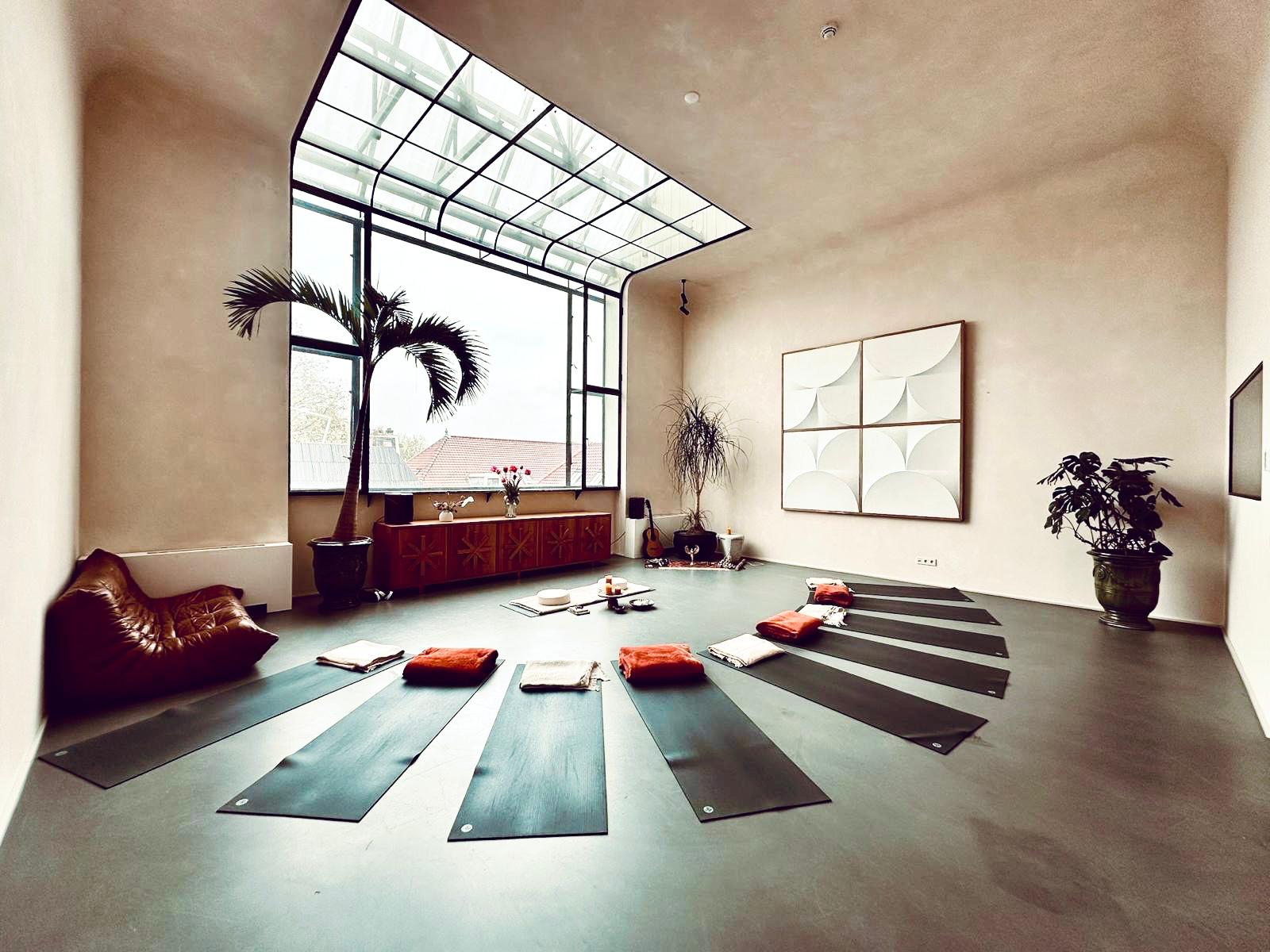
The room was slightly cold at the start.
The kind of cold your skin notices before your mind does.
Dim light, low sound, no pressure.
A space that quietly said,
“You can land now.”
We set intentions.
We lay down on thick mats.
We wrapped ourselves in blankets.
And then the breathing began.
Continuous.
Circular.
No pause between inhale and exhale.
The kind of breath pattern that doesn’t ask the mind what it thinks, it asks the body what it remembers.
When the Body Takes Over
After a few minutes, things started shifting.
My hands tingled first.
Then my face.
Then the cold, an unmistakable sign that blood flow is moving inward and the parasympathetic system is coming online.
This wasn’t emotion.
This was physics.
CO₂ levels shifting.
Vagal pathways activating.
The prefrontal cortex taking a step back.
The limbic system moving forward.
It’s the same mechanism that makes certain music drop your shoulders bya centimetre.
Only this time, the instrument was breath.
Sadness Without a Story
And then, without warning, sadness surfaced.
Not dramatic sadness.
Not the kind attached to a memory, or perhaps it was. Hard to tell.
Just the quiet, old kind.
The one that lives in the tissues, the diaphragm, the musculature you tighten without knowing it.
It rose exactly the way the research describes:
When the body feels safe enough, it releases what it never had space to process.
Tears came.
Soft.
A nervous system completing a cycle.
This is the part we so often forget:
Emotion is biology trying to move.
Warmth: The After-State
After the tears, warmth followed.
Not metaphorical warmth, literal warmth.
Heat returning to the fingers and toes.
Breath deepening.
Heart rate dropping.
Muscles letting go of that invisible brace they’ve been holding.
The shift was so clear I almost laughed.
Not because it was funny, but because it was familiar.
This was the same “coming home” feeling I experience with theright song at the right moment.
The same vagal response.
The same internal “click.”
Only deeper.
Because the tool was breath, not sound, vibration was generated from the inside out.
The Nervous System Doesn’t Lie
What struck me most last night wasn’t the release itself.
It was the accuracy.
My body didn’t need an insight.
It needed a mechanism.
A pattern.
A rhythm strong enough to override the cognitive noise and drop me back into myself.
Breath did that.
And afterward, my nervous system felt like it had been waiting for me to do this for years.
Not as a one-time experience.
Not as a novelty.
But as maintenance.
A way of saying:
“Thank you. More of this, please.”
Breath as a Quiet Form of Care
We talk a lot about self-care, but most of it is top-down.
Ideas.
Intentions.
Plans.
Breathwork is bottom-up.
Physiology first.
Meaning second.
It doesn’t ask you to “let go.”
It simply removes the conditions that made holding on necessary.
It’s not dramatic.
It’s precise.
A nervous system intervention disguised as a wellness practice.
The body knows exactly what to do when you finally stop getting in its way.
Let’s Wrap This Up
Music brings us home.
Breath does too.
It just happens through a different door.
Both work because they speak the language of the nervous system: rhythm, pattern, predictability, safety.
Last night reminded me that regulation isn’t a mindset.
It’s biology.
And it needs practice, not platitudes.
Sometimes coming back to yourself requires nothing more than lying down, breathing in a circle, and letting the body finally finish what it started.
Sometimes regulation feels like warmth returning to your hands.
And sometimes belonging begins with a single breath.
Lots of love,
Stina
Get in touch


.svg)